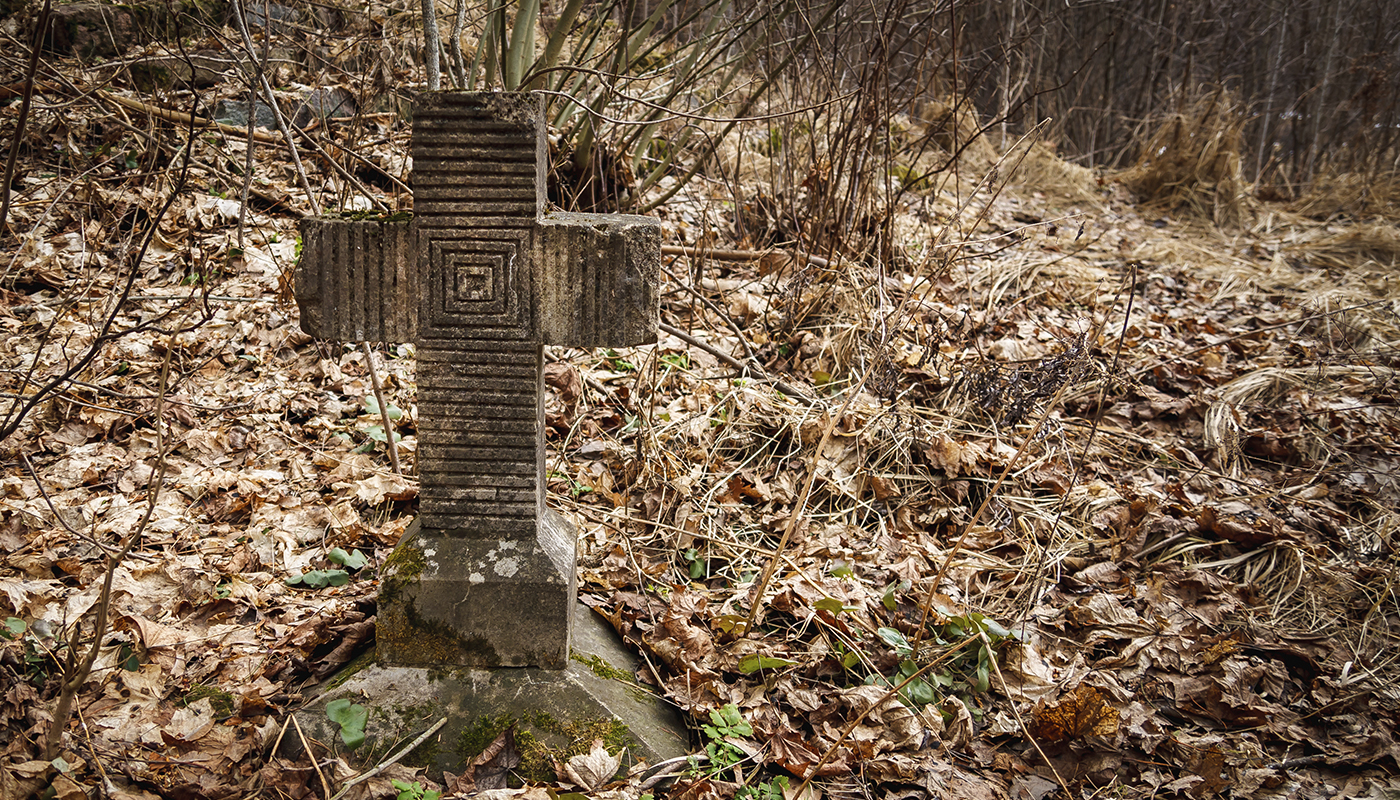
Military cemeteries created after the First World War did not all follow one model. The national characteristics of cemeteries can be seen in grave shapes, plants, religious signs, monuments, and burial rules. France, Britain, and Germany built remembrance places in different ways. These differences came from law, religion, landscape, practical needs and ideas about how soldiers should be remembered after mass death.
How National Characteristics Shaped Cemetery Design
A military cemetery is more than just rows of graves. Its layout can show how a country understood sacrifice, equality, and public memory. French, British and German cemeteries developed different visual languages on the same former battlefields.
French cemeteries followed a practical and regular system. British cemeteries were planned more like gardens. German sites often became darker, quieter places with trees, stone walls, and communal graves. These forms came from different national choices after the war.
France Used Order, Equality and Secular Rules
French law from 29 December 1915 created national cemeteries for soldiers who had died for France. Their graves were to remain permanently and be maintained by the state. A later law in July 1920 allowed families to request the return of identified bodies for burial in family graves. About thirty percent, around 250,000 men, were returned this way.
France had 265 cemeteries holding 730,000 identified and unidentified soldiers. Building them was difficult because France also supported wounded people, widows, and orphans while rebuilding destroyed towns.
The French system gave more importance to practical organization than architecture. A standard layout was adopted in 1928. Graves stood in straight rows while the French flag became the central point. Red roses gave one of the few strong colors.
Several grave forms showed different beliefs: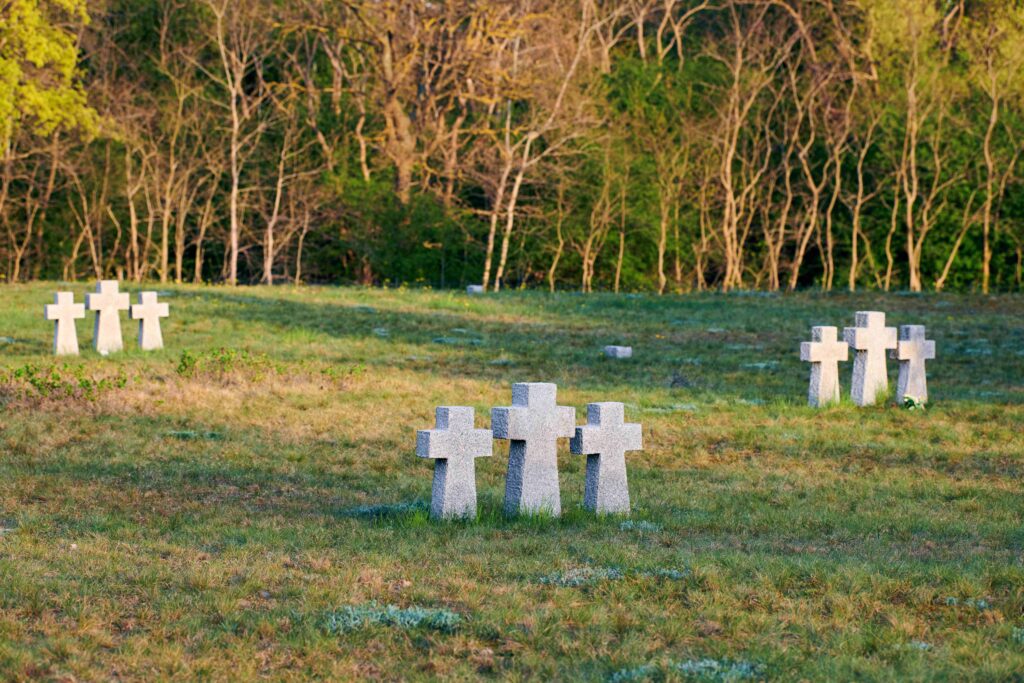
- Latin crosses were used for Christian dead
- Muslim soldiers had special headstones with Arabic text
- Jewish soldiers received their own headstone form
- other religions and freethinkers also had a separate marker
A plaque carried the soldier’s identity and the words “Mort pour la France”. Extra decoration that could make one grave appear more important than another was forbidden. This matched the republican idea of equality and freedom of belief.
British Cemeteries Used Gardens and Individual Memory
British policy developed differently. After the first weeks of fighting, bodies were normally buried near where soldiers died instead of being returned home. Cost was one reason, but equality between known and unknown dead also mattered. After the war, most cemeteries stayed where they had been created.
This decision explains why many British cemeteries stand close together. Some graves remained in French municipal cemeteries, while other burial places became permanent Commonwealth sites. Traditions of different groups were also considered, including Indian soldiers whose bodies had been cremated.
British graves were marked with simple headstones. Families of identified soldiers could choose a religious emblem such as a cross, Star of David, or Muslim symbol. Families could also request a personal epitaph, limited to 66 letters, but payment was required.
Architecture Mixed Stone With Living Plants
Three architects had major roles in early design work: Reginald Bloomfield, Herbert Baker, and Edwin Lutyens. Younger architects also worked under their direction. The aim was not only formal grave fields. Many cemeteries were made to feel like gardens, with trees, bushes, flowers, and grass around the stones.
Bloomfield designed the Cross of Sacrifice for cemeteries with more than forty graves. The monument included a bronze sword facing downward. Lutyens designed the Stone of Remembrance for cemeteries containing more than 400 graves. It carried the words “Their name liveth for evermore.”
Planting also had meaning. Roses and small flowering plants were used near headstones, while closely cut grass reduced visual differences between graves. Some grave rows still looked irregular because they followed original wartime burials. In a few places, headstones were even touched because soldiers had died together in the same trench.
German Cemeteries Created a More Austere Landscape
German military graves in France followed another path. From 1919, French authorities removed many small German cemeteries near the old front and concentrated graves into larger places. The German War Graves Organisation was permitted to work directly in these cemeteries in 1926.
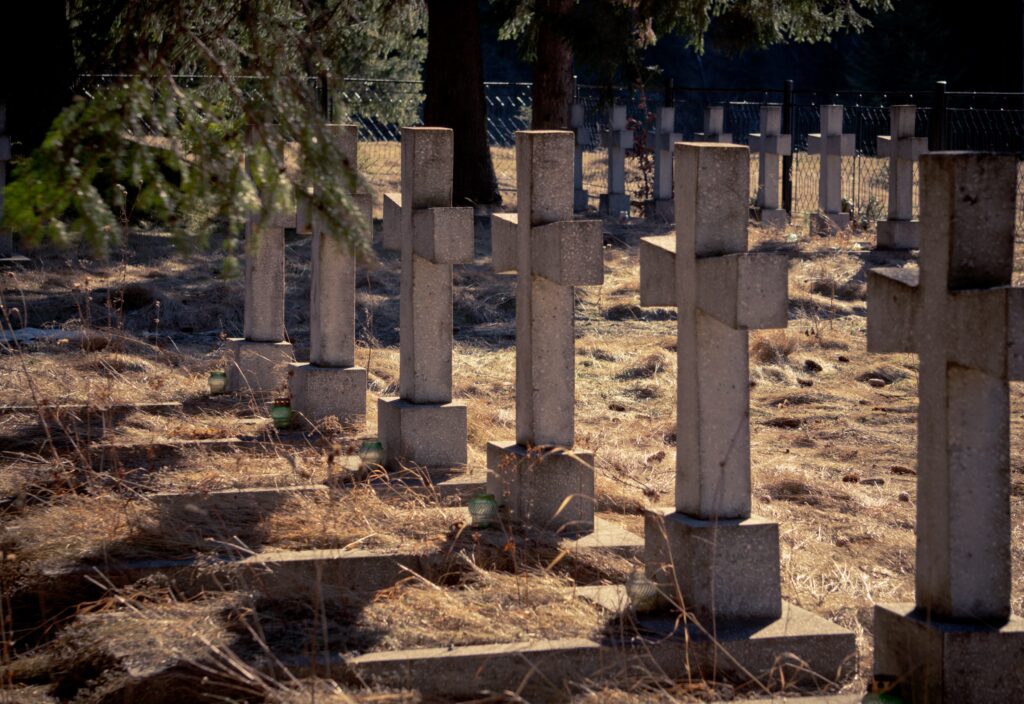 At first, many sites were simple open fields with wooden crosses. Where losses had been very high, larger cemeteries appeared. Neuville–Saint–Vaast became the biggest, with 36,000 graves.
Architect Robert Tischler shaped many German cemeteries between the wars. His designs were based on mourning and the idea of universal life. Limited space meant that many soldiers were placed in large communal graves. Trees grew naturally, and cemeteries fitted the surrounding land.
Stone walls, iron gates, and large stone crosses gave many sites a severe appearance. Communal graves were usually marked by engraved slabs and rough stone crosses. During the 1920s, individual graves could have wooden crosses with zinc plates or flat stone markers.
In the 1950s, upright crosses became more common and were made from stronger materials such as aluminum, cast iron, or stone. Many crosses visible today therefore come from later changes, not directly from the First World War period.
Different Designs Carried Different Ideas of Remembrance
The national characteristics of cemeteries remained visible because each system used different rules. French sites stressed order, state responsibility, and equal treatment. British cemeteries combined simple headstones with gardens and personal inscriptions. German cemeteries used a more somber landscape, communal burial, and strong natural elements.
These differences did not change the basic purpose. Each cemetery marked mass loss and kept names, graves, or collective memory in a permanent place. Yet the way this purpose was expressed was not the same. Rows, plants, stones, crosses, and inscriptions became part of how each country gave shape to remembrance after the Great War for future generations.