
Arras had lived close to the front for years, and by spring 1917 the ruined town became the center of a large British attack. The Battle of Arras in April 1917 combined underground preparation, heavy bombardment, and attacks toward Vimy, Monchy–le–Preux, and Bullecourt. The first advance was fast, but German reinforcements soon stopped a wider breakthrough and changed the battle into smaller, costly fights.
Why Arras Became Important for the 1917 Offensive
Arras stood only a few kilometers from German positions and had been under regular shelling since October 1914. Much of the town center was damaged, including the medieval town hall and its belfry. By February 1916, only a small part of the civilian population remained, while British military presence had become strong enough that local affairs were conducted in French and English.
For Allied planners, the position of Arras made it useful for a spring operation. After the Chantilly Conference in November 1916, General Nivelle and General Haig prepared a combined plan for 1917. The British attack around Arras was meant to draw German reserves before the larger French assault at Chemin des Dames.
This role made secrecy important. Large numbers of soldiers had to come near the front without giving clear warning to German observers. British planning therefore depended not only on guns and infantry but also on the ground under the town.
A Hidden Army Below the Streets
New Zealand engineers helped create a large underground system by linking caves, quarries, and tunnels. By the end of March, more than 24,000 soldiers could stay below Arras before the offensive. The whole network reached about nineteen kilometers.
Different parts received names familiar to the soldiers using them. Galleries under Cambrai Road carried names such as Carlisle, Glasgow, Manchester, Liverpool, and Chester. In the Ronville area, New Zealanders used names from their country, including Wellington.
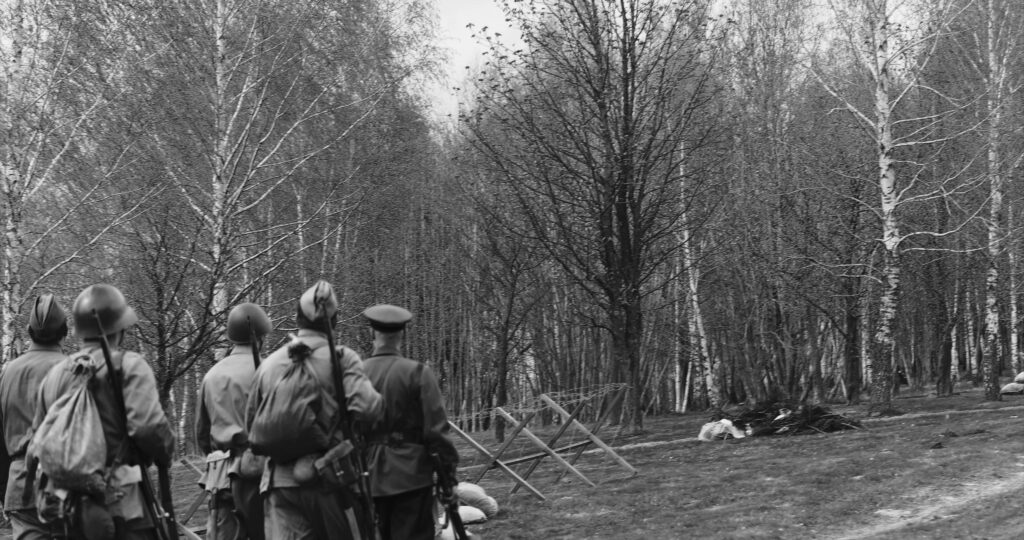
Life below ground was basic but organized. Kitchens, water supplies, electric lighting, and latrines were installed. A hospital for 700 wounded was prepared in Thompson’s Cave, with an operating theater, waiting areas, space for stretcher bearers, and a mortuary. For men waiting near the front, these tunnels offered much better protection than exposed trenches.
How the Attack Was Prepared Above Ground
The underground network was only one part of the preparation. British forces also used aerial observation and raids to identify targets. Some raids involved several hundred soldiers and were used to test German defenses and collect information. Models of the battlefield helped officers understand the ground before the attack.
Several methods were combined before the infantry went forward:
- aerial reconnaissance helped locate German positions
- raids provided information about defensive lines
- terrain models were used during preparation
- tanks were included again after their earlier use on the Somme
- Livens Projectors were prepared to deliver poison gas
A strong artillery bombardment was also planned. It lasted four days before the main assault and was intended to reduce German ability to answer when British troops moved forward.
The Morning of 9 April
The attack began at 5.30 a.m. on Monday, 9 April 1917. On the northern side, the British 1st Army included four Canadian divisions moving against Vimy Ridge. Taking this high ground could help British artillery and support later movement toward Douai.
Farther south, the 3rd Army under General Edmund Allenby had objectives around the Scarpe and Monchy–le–Preux. The village stood on high ground east of Arras and gave wide views across the valley. On the southern side, the 5th Army under General Hubert Gough was directed toward Bullecourt, an important German position connected with the Hindenburg Line.
Fast Gains and the End of the First Momentum
The first two days brought large gains. British troops advanced about five kilometers on both sides of the Scarpe and captured several villages. Vimy Ridge was secured, which made German gun positions in nearby villages more difficult to hold.
Monchy–le–Preux did not fall easily. German troops had made the village into a strong defensive point, and hard fighting continued there before it was taken on 11 April. Wancourt and Héninel followed on the next day.
The early movement forced German troops back toward a second defensive line. It did not continue with speed. Reinforcements arrived, and from 14 April German counterattacks became much stronger. The chance to turn the opening success into a broad breakthrough was lost.
Fighting then became more local. Battles followed at Arleux on 28 and 29 April, Fresnoy on 3 and 4 May, and Rœux on 13 and 14 May. News from Chemin des Dames also showed that the wider Allied plan was not producing the hoped result.
What the Battle Changed Around Arras
Haig continued attacks for several weeks, partly to hold German forces in the area and reduce pressure on the French. Another aim was to create a front line that British forces could defend more easily.
Measured only by ground and prisoners, the offensive produced visible results. British troops took about 20,000 prisoners, captured large quantities of ammunition, and moved the fighting zone around ten kilometers away from Arras. This reduced the pressure of shelling that the town had lived with since 1914.
The price was high. More than 100,000 British soldiers were put out of action during the fighting in April and May 1917. German losses could not be given with the same certainty.
The Battle of Arras in April 1917 showed two very different moments. Careful preparation and surprise created a quick opening, but that opening did not become the decisive result planned before the attack. The front moved, and Arras gained some relief, while repeated local fighting continued to consume large numbers of soldiers.